How to Redirect Student Behavior Without Stopping the Whole Class
Keep teaching while handling the distractions.
It happens every single day. You are in the middle of a fantastic lesson. You are explaining a complex concept. The kids are finally engaged. You feel like the greatest teacher on the planet.
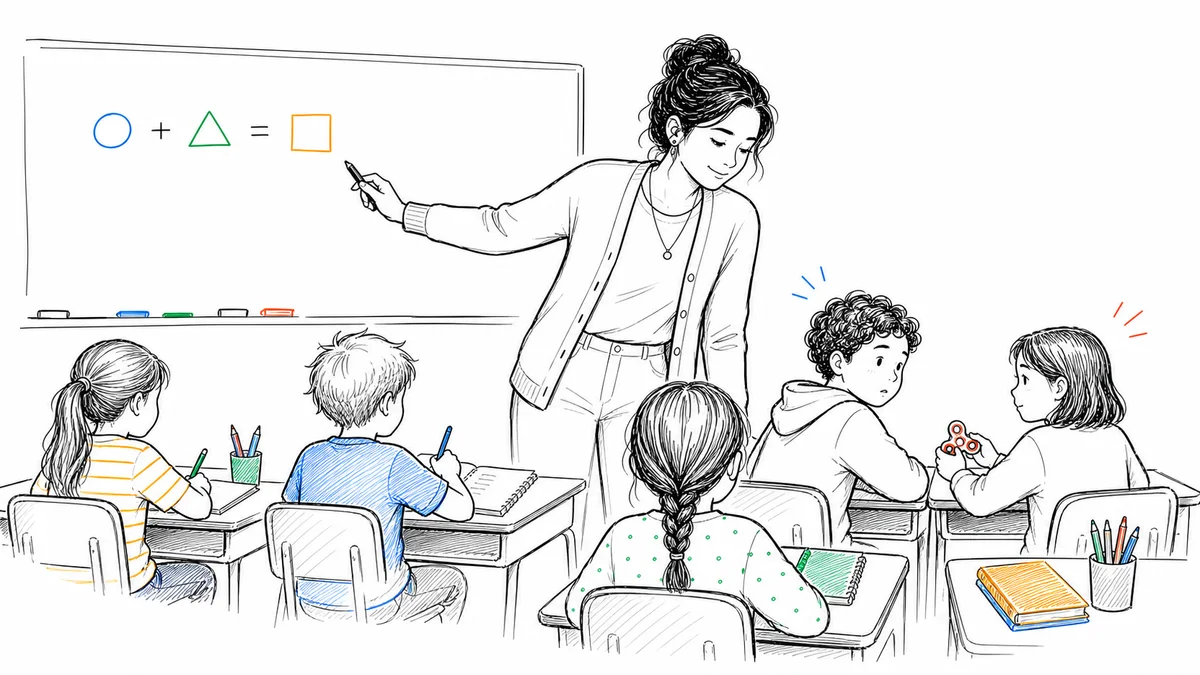
Then, you see it. Two students in the back row are whispering. One of them is showing the other a toy hidden under their desk.
You have a choice to make. You can stop your entire lesson, call them out across the room, and derail the momentum you just spent twenty minutes building. Or, you can figure out how to redirect student behavior without losing the rest of the class.
I teach third grade. Before that, I spent more than twenty years working in education. If I stopped my lesson every time a student was off-task, I would never finish a single math problem. You have to learn how to keep the train moving while simultaneously dealing with the distractions in the back car.
There is a lot of educational jargon out there about behavior management. You hear words like positive behavior interventions and restorative practices. Those are great concepts. But when you are standing in front of twenty-five kids and someone is making armpit noises, you do not need theory. You need practical strategies.
Here are five redirection techniques I actually use mid-lesson. They are subtle, they are quick, and they keep the focus on the learning.
The Power of Proximity
This is the easiest and most effective tool in your belt. You do not even have to speak to use it.
When you see a student getting off-task, simply walk over to them. Do not stop teaching. Keep talking. Keep explaining the lesson. Just move your physical body so you are standing right next to their desk.
The vast majority of the time, the behavior will stop instantly. They realize you are there. They slide the toy back into their desk. They sit up straight. You never had to interrupt your sentence. Proximity is like magic. It works because it addresses the behavior without giving it an audience.
The Teacher Look
Never underestimate the power of nonverbal cues. A solid teacher look can stop a disruption from ten feet away.
When a student is talking out of turn, make direct eye contact with them. Raise your eyebrows slightly. Give a very subtle shake of your head. You can also use a hand signal, like tapping your own desk to remind them to focus, or placing a finger over your lips.
I have spent years perfecting my teacher look. It is a mixture of profound disappointment and mild confusion. You have to practice it in the mirror. It sounds ridiculous, but it works. You have to establish these cues early in the year. Once the kids know what they mean, you can redirect them entirely in silence. The rest of the class will not even know it happened. You maintain your authority without ever raising your voice.
Planned Ignoring
Sometimes, the best reaction is no reaction at all.
If a student is doing something mildly annoying just to get attention, planned ignoring is often the best route. If they are tapping a pencil softly or making a silly face, and it is not stopping the other kids from learning, just ignore it.
If you stop your lesson to address the tapping pencil, you have just rewarded the behavior with your attention. Keep teaching the kids who are listening. Often, the student will realize their behavior is not getting a response and they will stop on their own. Obviously, you cannot ignore unsafe behavior, but you can absolutely ignore a sigh or an eye roll.
The Private Redirect
There are times when proximity and the teacher look are not enough. You actually have to say something.
When you do, make it a private redirect. Walk over to the student, lean down, and whisper exactly what you need them to do. Keep it brief and keep it positive.
Do not say to stop playing with an eraser. Say that you need them to open their book to page forty and pick up their pencil. Tell them what to do, not what to stop doing.
By whispering, you save their dignity. You do not embarrass them in front of their peers. When kids feel embarrassed, they get defensive and the behavior usually escalates. A private whisper shows them you are on their side.
Giving Them a Choice
If a student is refusing to work, a direct command will often lead to a power struggle. Instead of telling them what to do, give them a controlled choice.
Walk over and quietly ask if they want to do the even numbers or the odd numbers. Ask them which one they want to start with.
You do not care which one they pick. The goal is just to get them working. Giving them a choice gives them a sense of control over the situation. It bypasses the power struggle entirely. I use this trick at home too: shoes on now, or in two minutes? Either way, the shoes are going on. I also offer a joke about construction. The answer is usually no, but I say I am still working on it anyway.
Track the Triggers
Redirection is a fantastic short-term tool. It keeps your lesson moving. It keeps the other twenty-four students focused on their math problems. However, redirection only works long-term if you are also tracking what is triggering the behavior in the first place. You cannot play a guessing game all year. It will burn you out.
If you find yourself standing next to the same student every single day during reading group, proximity is no longer a solution. It is just a bandage. You need to figure out why reading group is a trigger for that child.
ShortHand lets you log what happened right after you redirect, while it is still fresh. You can track those triggers and find real solutions. Try it free at getshorthandapp.com.
Related reading: Student Behavior Problems in the Classroom | The Student Behavior Log for Teachers | How to Track Student Behavior in the Classroom
Part of The Teacher's Survival Guide to Workload and Burnout.
Stop trying to remember everything.
Try ShortHand Free →