Sample Email to Parents About Student Behavior (5 Templates You Can Copy)
Copy-paste scripts for the emails teachers write over and over
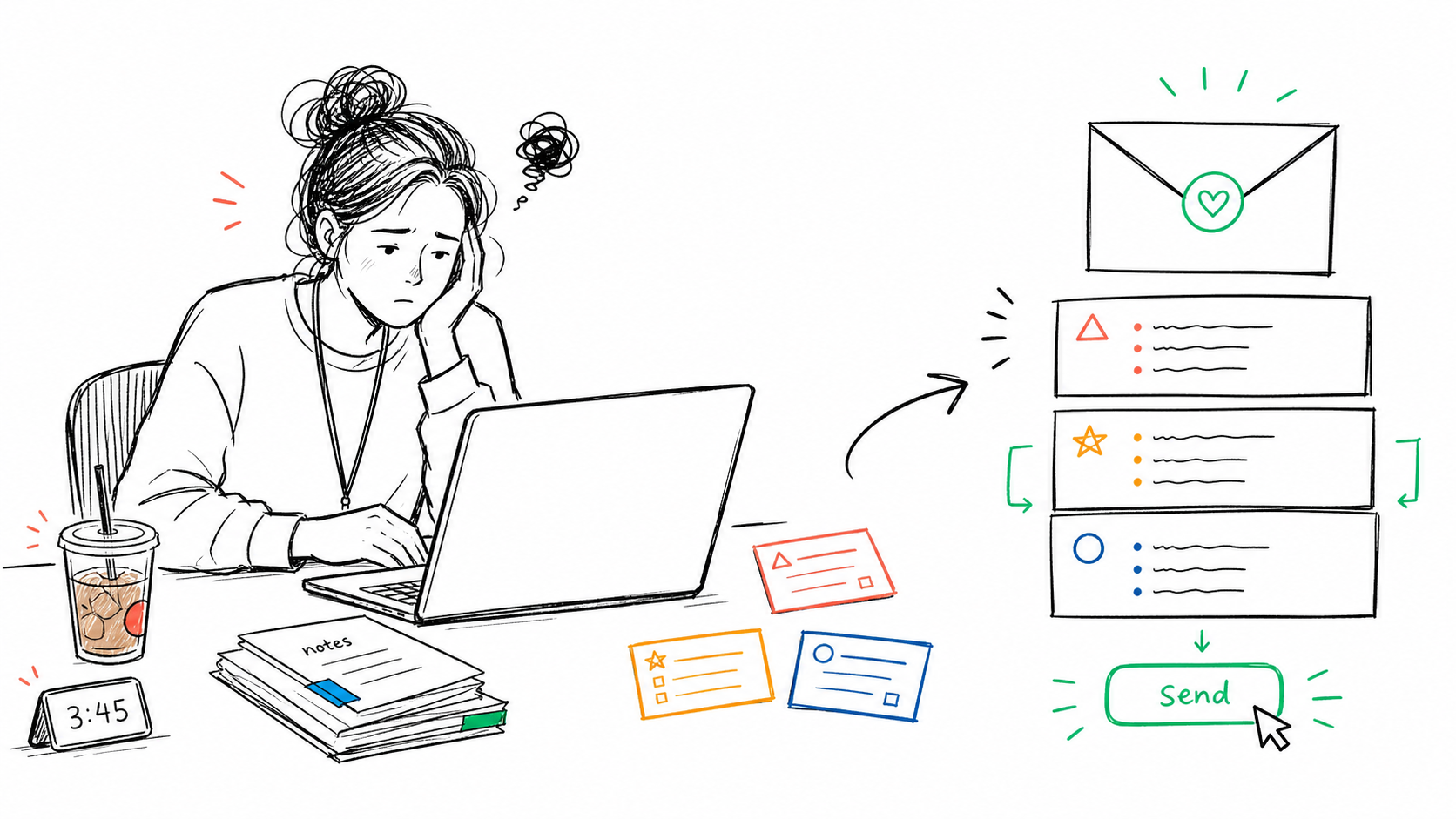
It is 3:45 PM. You are exhausted, your coffee is a cold memory, and you are staring at a blinking cursor. You need to tell a parent that their kid had a rough day, but you are too peopled out to find the right words.
The blank screen fatigue is real. You want to be honest without being alarming, and professional without sounding like a robot.
After 20+ years in K-8 classrooms and my time as a Registered Behavior Technician, I learned that the best parent behavior emails are short, objective, and collaborative. I stopped reinventing the wheel and started using scripts.
As a parent of a neurodiverse child, I've also experienced these emails from the other side. The messages that helped me most were the ones that described what happened clearly, avoided labels, and focused on solutions. Parents do not need perfection. They need information they can understand and act on.
Before any of these emails, there's one message worth sending first: a welcome letter home at the start of the year. It's part of why parents are more likely to respond when things get hard later. The Welcome Letter Generator takes 30 seconds and sets the tone for the whole year.
Here are five copy-paste templates for sample emails to parents about student behavior, so you can clear your inbox and get home on time.
Why Parent Behavior Emails Matter More Than You Think
Before the templates, a quick word on why this communication is worth doing well.
Parent emails about behavior aren't just administrative tasks. They're relationship investments. A teacher who reaches out proactively (before things escalate) builds the kind of trust that makes hard conversations much easier later. A parent who only hears from school when something goes wrong may naturally feel anxious or defensive. A parent who hears from you regularly (wins and losses) becomes a partner.
The other thing: written communication creates a record. If a behavior escalates, if you're sitting in an IEP meeting six months from now, if anyone asks what was communicated and when, you have it. These emails are your documentation as much as they are communication.
When to Email vs. Call
Quick note before the templates.
If it is something emotional, escalating, or likely to be misunderstood, call. Tone matters too much in those situations and email can make things worse. If a student had a significant outburst, made a threat, or was involved in something that could embarrass the family, call first, then follow up in writing. If the situation was a physical altercation, I wrote a separate guide with templates for the email to parents about a fight at school, because that one deserves extra care.
But for patterns, updates, and anything you want a written record of, a behavior email to parents works well. That is where having a solid template ready to go really saves time.
Template 1: The Positive "Bank Account" Builder
Use this to build rapport before you actually need to report a problem.
The best time to contact a parent about behavior is before there's a problem. Teachers who only email when something goes wrong train parents to dread seeing a message from school. Build the relationship during the good moments so you have credit when you need it.
Subject: Quick win for [Student Name]!
Hi [Parent/Guardian Name],
I just wanted to share a quick highlight from today. [Student Name] was a rockstar during [Subject/Activity]. I specifically noticed how they [specific action, e.g., helped a peer without being asked / stayed focused for the full lesson].
It was great to see that level of effort, and I wanted to make sure you heard about it too.
Best, [Your Name]
Why it works: Short, specific, and positive. The specificity matters: "they were great today" lands differently than "they helped a classmate figure out a math problem without being asked." Specific praise is credible. If you want to make this a weekly habit, there are five more ready-to-send scripts in the positive behavior email to parents templates collection.
Template 2: The Data-Driven Concern
Use this when a behavior is becoming a pattern. Keep it objective and focus on the where and when.
When something is happening repeatedly, vague language makes parents defensive. "He's been disruptive" triggers a defensive response. "He's been having a hard time during transitions from math to reading, specifically when there's a change from the usual routine" is specific enough to be actionable and objective enough not to feel like an accusation.
Subject: Following up on [Student Name]
Hi [Parent/Guardian Name],
I am reaching out to keep you in the loop on a pattern I have been seeing with [Student Name]. Lately, they have been struggling with [behavior], specifically during [transition/subject].
I have been supporting them by [briefly mention one strategy, e.g., providing a visual timer], but I wanted to see if you have any insight into what works best for them at home. I would love to make sure we are consistent so [Student Name] can get back to feeling successful in class.
Thanks for the support, [Your Name]
Why it works: It names a specific pattern, mentions what you're already doing, and invites the parent as a partner rather than informing them of a problem. The collaborative framing changes the entire tone. For the harder version of this conversation, when the behavior is serious and repeated, see how to email parents about bad behavior.
Template 3: The Meeting Request
Use this when the behavior is too complex for an email chain.
Some conversations shouldn't happen over email. If a student's behavior involves emotional regulation, potential learning challenges, family stressors, or anything that requires nuance, get on the phone or meet in person. Don't let a complex situation drag out in a slow email thread.
Subject: Touching base regarding [Student Name]
Hi [Parent/Guardian Name],
I would like to set up a quick 10–15 minute chat to discuss how we can better support [Student Name] with [specific concern]. I think a short conversation will be more productive than going back and forth over email.
Are you available for a call or Zoom on [Day] at [Time]? If not, let me know what works for you.
Looking forward to connecting, [Your Name]
Why it works: It's direct without being alarming. It signals that this matters without catastrophizing. And it moves the conversation to a format where tone, warmth, and back-and-forth are possible.
Template 4: The Written Follow-Up
Use this immediately after a phone call or meeting. Crucial for documentation.
This is the most underused template on the list. After any verbal conversation about a student's behavior, send a brief summary email within 24 hours. It creates a shared record and holds both parties accountable to what was agreed.
Subject: Summary of our conversation regarding [Student Name]
Hi [Parent/Guardian Name],
Thank you for chatting with me today. I really appreciate us being on the same page. Just to recap our plan:
- We are going to try [Strategy 1].
- I will monitor [behavior] specifically during [time of day].
- We will touch base again on [Date].
I will keep you updated on how things progress here.
Best, [Your Name]
Why it works: No ambiguity about what was agreed. No "I thought you said" conversations later. If the situation ever escalates to an IEP or administrative level, you have documentation that shows you communicated proactively and established a plan. And if the call itself went badly, here is how to write a follow-up email after a difficult parent phone call without reigniting the conflict.
Template 5: The End-of-Week Pulse Check
Use this for students on a behavior plan who need consistent communication.
For students with IEPs, 504s, or behavior intervention plans, consistent communication isn't optional. It's expected. A weekly pulse check keeps parents informed, keeps you accountable, and creates a documented timeline that's invaluable at review meetings.
Subject: Weekly Update: [Student Name]
Hi [Parent/Guardian Name],
Here is a quick look at how [Student Name] did this week:
The Wins: [1–2 specific successes]
The Work: [1–2 areas still needing growth]
Next Steps: We will be focusing on [goal] starting Monday.
Thanks for the partnership at home, it makes a huge difference.
Best, [Your Name]
Why it works: Structured, fast to write, and balanced. Naming both wins and challenges in the same email is important: it builds credibility and prevents parents from feeling like updates only come when things are bad.
The Part Nobody Talks About: Finding the Notes
Templates solve the writing problem. They don't solve the memory problem.
To write a good behavior email, even with a template, you need the details. The specific behavior. The time it happened. The context. What you tried. What worked.
If you're relying on memory at 4 PM, you're going to write vague emails. "He was disruptive today" instead of "He had difficulty during the transition from reading to math at 10:20. He refused to put his book away and raised his voice when redirected. I gave him a two-minute warning for transitions for the rest of the day and it helped."
That second version is a professional document. It's useful in a parent meeting. It's useful in an IEP. The first version is noise.
This is exactly the problem I built ShortHand to solve. You log notes in under 5 seconds during the day: voice-to-text while walking, one tap to select the student. By the time 4 PM rolls around, ShortHand has already drafted a parent email from your notes. You review it, adjust the tone if needed, and send.
If you're not ready for an app yet and just want somewhere to jot down every call and email as it happens, our free parent communication log is a printable option you can fill in on screen or by hand.
One more thing worth naming: when a behavior incident was genuinely hard, the first instinct is to write an email that sounds like how you feel. That email is usually not the one to send. The templates above are intentionally calm and factual. That is not minimizing what happened. It is protecting you and making it more likely the parent can actually hear what you are saying. Objective, professional wording lands better than emotional wording, especially when the relationship is already under strain.
The templates above are useful. But the real unlock is having the documentation to fill them with something specific.
Once you've built up a few weeks of notes, you can use Ask ShortHand to find out something like "has this happened before with him?" without scrolling back through weeks of entries while you're trying to write the email.
Quick Reference: Which Template to Use When
| Situation | Template |
|---|---|
| Student had a good day / moment | Template 1: Positive Builder |
| Pattern emerging, first contact | Template 2: Data-Driven Concern |
| Situation needs a real conversation | Template 3: Meeting Request |
| After any phone call or meeting | Template 4: Written Follow-Up |
| Student on a behavior plan | Template 5: Weekly Pulse Check |
Want all 10 templates in one place?
Gregory Lebed is a 3rd grade teacher with 20+ years of K-8 experience and a former Registered Behavior Technician (RBT). He built ShortHand to help teachers spend less time on paperwork and more time teaching.
Part of The Teacher's Complete Guide to Parent Communication.
Frequently Asked Questions
Stop trying to remember everything.
Try ShortHand Free →