How to Document Parent Contact for IEP Students (What IDEA Expects From You)
IDEA requires meaningful parent involvement, not just occasional updates. Here's what that looks like day to day.
Parent communication for students with Individualized Education Programs is not an optional best practice. It is a core expectation under the Individuals with Disabilities Education Act. And when an IEP meeting starts, people are going to ask what you have seen in your classroom. If your notes live only in your memory, that is the moment you will wish you had written them down. Knowing how to document parent contact for IEP students is a straightforward part of the job once you have a system.
I have spent over twenty years in education, including work as a Registered Behavior Technician. I have sat through more IEP meetings than I can count.
One thing those years taught me is that people rarely disagree about events that were documented clearly. They disagree about events that everyone remembers differently. Good documentation protects the school, but it also protects the family and the student because everyone is working from the same facts.
Picture what happens when teacher documentation is incomplete. A parent advocate or a lawyer sits at the table. They ask to see the contact logs regarding a spike in behaviors or a drop in grades. The room gets very quiet because the general education teacher assumed the special education case manager was handling everything. The district scrambles. It is an incredibly uncomfortable position to be in.
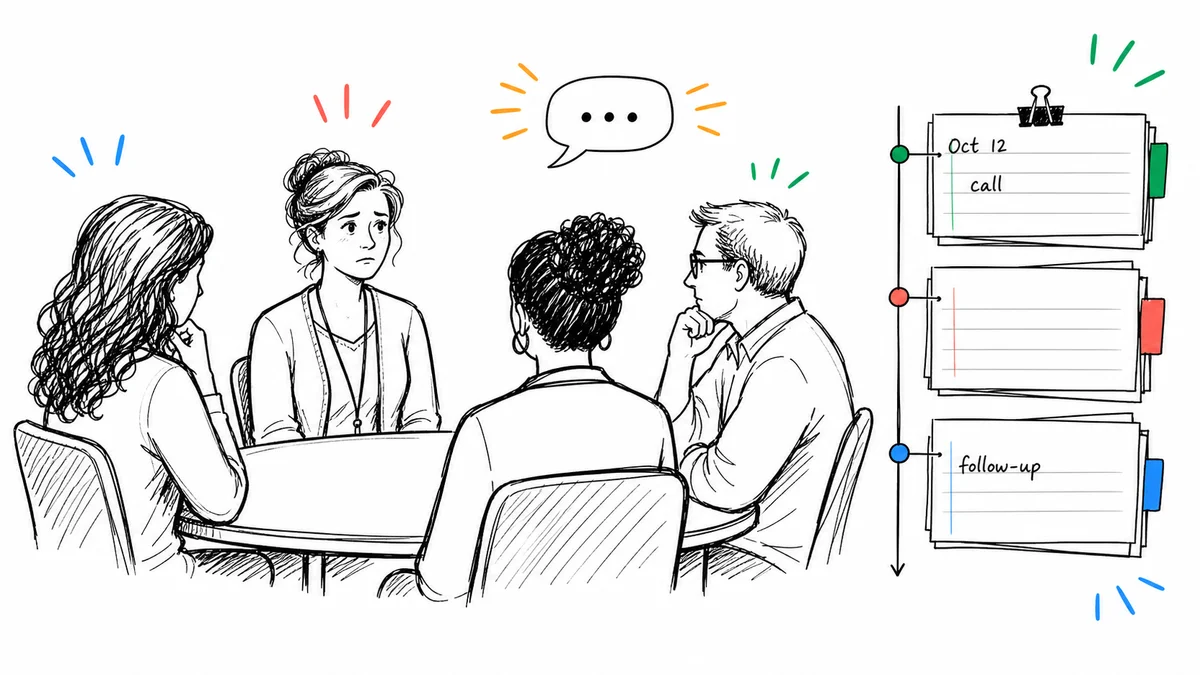
Here is what IDEA expects and how to handle your own documentation without losing your mind.
How to Document Parent Contact for IEP Compliance
The Individuals with Disabilities Education Act is very clear about parent participation. Schools must ensure parents have the opportunity to participate in meetings with respect to the identification, evaluation, and educational placement of their child.
This means your communication cannot just be a generic newsletter or a broadcast message to the entire class. You have to prove you made a meaningful effort to include the parents of students with disabilities. Prior written notice is a formal administrative requirement, but day-to-day communication also falls under this umbrella of parent participation.
If a student with a learning disability is failing your class, you must inform the family. If a student with an emotional behavioral disability is exhibiting behaviors that impede their learning, you must inform the family. And you must document that effort.
"I Told the Case Manager" Is Not a Defense
This is the single most common mistake general education teachers make. You notice an issue in your classroom. You shoot a quick email to the special education case manager. You walk away assuming your job is done.
It is not.
Case managers carry massive caseloads. They are managing legal paperwork, coordinating related services, and tracking overall progress. They cannot be the sole point of contact for every single academic issue in your specific classroom.
If a parent asks why their child failed your quarter three math benchmark, the case manager is not going to have those specific details. You are the teacher of record for that class. Your own records are what fill in that picture. Keeping your own communication log is part of doing that job well.
What to Log for Every IEP-Related Contact
You do not need to write a legal brief for every phone call. You do need to capture specific, objective data points. Every time you contact a parent of a student with an IEP, your log needs these elements.
Date and method of contact. Record the exact date and time. Note whether it was a phone call, an email, or a conversation at the classroom door. If the contact was written, keep a copy of the exact text.
Who you reached. Did you speak directly to the parent? Did you leave a voicemail? Did you hand a note to a relative at pickup? Be specific. Leaving a message with an older sibling does not count as meaningful parent participation. If you called and the phone rang with no answer, write that down. Failed attempts are still documentation of your effort.
Objective summary of the discussion. Stick entirely to the facts. What was the academic or behavioral issue? How does it relate to their specific IEP goals or accommodations? Do not write your opinions or frustrations. "Called home regarding student refusing to use math manipulatives during independent practice. Reminded parent this is a key accommodation in their IEP. Parent stated they will discuss it tonight." That is all you need.
Follow-up decisions. If you agreed to a specific action, write it down immediately. If you told a parent you would send a progress report on Friday, that is now a timeline. Document it. If the parent requested an emergency IEP meeting, document the exact time and date of that request.
The Difference Between Your Log and the Case Manager's File
The case manager maintains the official legal file for the district. They document the formal meeting invitations, the procedural safeguards, and the signature pages.
Your log is the operational history of what happens in your specific classroom. It shows that you actually implemented the accommodations, and that you informed the family when the student struggled. When an advocate asks for proof of communication, your logs are usually what the principal turns around and asks you to produce.
As a classroom teacher, I know how tempting it is to assume you'll remember the important details later. In reality, by the time an annual review comes around, even significant events start to blur together. Documentation bridges that gap.
A Better Way to Maintain Compliance
Managing this level of documentation on sticky notes or a messy spreadsheet is a fast track to burnout. You need a system that does the heavy lifting. A parent communication log gives you a simple structure for capturing every contact in one place, whether you use paper or a digital tool. If you want that structure right now, we built a free printable version you can fill in on screen or print blank for the binder. If your caseload also needs formal IEP goal data collection alongside parent contact, this comparison of special education behavior tracking software walks through which tools are built for that versus which are built for fast day-to-day documentation.
The ShortHand app timestamps every entry and ties every note directly to the student. You type your summary and save it. When the annual IEP meeting rolls around, you pull up a searchable record of your outreach in seconds instead of reconstructing it from memory. You can use Ask ShortHand to quickly find out something like "how many times did I contact this family this semester?" rather than counting through your logged entries by hand.
Stop piecing things together from memory before every IEP meeting. Try ShortHand free at getshorthandapp.com and go into your next annual review with a complete, organized record.
Related reading: How to Document Parent Contact as a Teacher | What to Do When a Parent Says You Never Called Them | IEP Behavior Documentation Checklist for Teachers | IEP Meeting Checklist for Teachers
Part of The Teacher's Complete Guide to Parent Communication.
Stop trying to remember everything.
Try ShortHand Free →