How to Track Student Behavior Data (Without Falling Behind During the School Day)
A realistic system that actually survives contact with real students
Tracking student behavior data sounds simple... until you try to do it during a real school day.
As a third-grade teacher, I used to think I was doing a decent job keeping track of behavior. But when I actually needed that data -- for parent meetings, interventions, or admin conversations -- I realized I was relying way too much on memory.
And memory is not data.
By 3:30 PM, the specific details of what happened at 9:45 are already gone. You remember the general shape of the day, but not the specifics that actually matter when you're sitting in a meeting trying to explain a pattern.
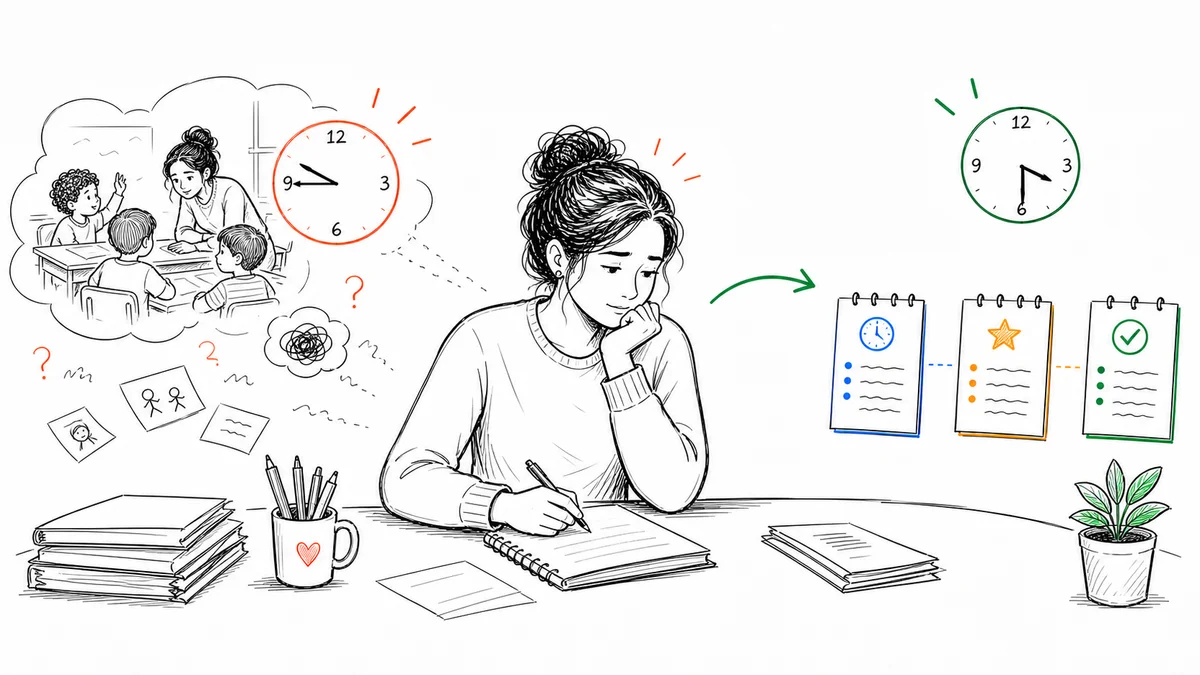
If you're trying to figure out how to track student behavior data in a way that's consistent, fast, and actually useful, here's what works.
Why Most Behavior Tracking Systems Fail
Most systems don't fail because teachers don't care. They fail because they're unrealistic.
Here's what usually goes wrong:
- Logging takes too long to do during instruction
- You can't do it in the moment without interrupting your teaching
- Notes are inconsistent from day to day
- Data is scattered across sticky notes, planners, and apps
- You only end up recording the big negative behaviors
So even if you start strong in September, it fades by October. The system requires more friction than your day allows, and eventually it just stops happening.
The fix isn't more discipline on your part. It's a better system.
Step 1: Decide What You're Actually Tracking
Before you track anything, get clear on what matters for your class.
You don't need to document everything. In fact, trying to document everything guarantees you'll document nothing consistently. Focus on the categories that will be most useful when you need to report or intervene.
A simple starting point:
- Disruptions (calling out, off-task behavior, refusals)
- Positive behaviors (helping, participation, effort, progress)
- Emotional regulation (frustration responses, shutdowns, outbursts)
Keep your categories broad and consistent. If your system is too detailed -- if you're trying to sub-categorize every behavior -- you won't stick with it past the first week. If your tracking is specifically for a student receiving Tier 2 MTSS interventions, see how to document Tier 2 supports for MTSS for intervention-specific data categories.
Step 2: Make It Fast Enough to Use in Real Time
This is where most systems break down.
If it takes more than 10 to 15 seconds to log something, it's too slow for classroom use. You are not going to stop a math lesson to fill out a form. You are not going to flip through a notebook while managing a transition. If the tool can't keep up with the pace of your classroom, you'll stop using it and go back to trying to remember things later.
You need something that:
- Works during instruction without stopping you
- Doesn't require navigation or multiple taps
- Can be done with a voice note or a single tap
Voice-to-text was the change that made everything click for me. When I want more than a tap, I open the full note and speak it while walking between desks, and it doesn't interrupt the class at all.
Step 3: Capture Context, Not Just the Behavior
"Disruptive" is not very useful on its own.
What actually helps in a parent meeting or an IEP is context: what was happening right before, what subject or activity you were in, what time of day, who else was nearby. Even a quick note like "math group work, frustrated, refused to start" is ten times more useful than just checking a box.
The context is usually what reveals the pattern. A student who struggles during independent math but participates actively in science group work is telling you something specific. A student who has difficulty on Mondays and Fridays but is solid mid-week is telling you something else. You can't see those patterns without the context attached to each entry.
Step 4: Track Consistently, Even in Small Doses
You don't need to log everything that happens. You do need consistency.
A realistic goal is three to five quick logs per day total, not per student. That's enough to spot patterns, support interventions, and have real examples ready for conversations. It's also realistic enough to actually maintain past October.
Consistency beats volume every time. Five notes a day for three months is more useful than twenty notes on Monday and nothing the rest of the week.
Step 5: Track Positive Behaviors Too
This is the part most teachers skip, and it's also the part that makes your data most useful.
If you only log problems, a few things happen. First, your records make the student look worse than they actually are. Second, you lose the ability to show improvement over time. Third, parents who receive only negative communication stop trusting that you see the full picture of their child.
Logging a quick note when a student has a good day, helps a peer, or recovers well from frustration takes the same amount of time as logging a behavior incident. And it completely changes what your documentation can show.
Step 6: Review the Data Weekly
Tracking is only half the value.
The real benefit comes when you step back and look for patterns. Does behavior spike at certain times of day? During specific subjects? With certain peers nearby? On certain days of the week? After lunch? Before specials?
These are the patterns that turn random incidents into actionable insight. A five-minute review on Friday afternoon -- just scrolling through what you logged -- often surfaces something you didn't consciously notice during the week. That pattern is what you bring to a meeting, a parent conversation, or a conversation with your school counselor.
Step 7: Use the Data for Communication
This is where good tracking changes everything.
Instead of saying "he's been struggling lately," you can say "I've noticed over the past two weeks that most disruptions happen during independent math work, specifically in the first ten minutes after we transition from morning meeting."
That is a completely different conversation, whether you're talking to a parent, a support staff member, or an administrator. It's specific, it's objective, and it builds trust. People respond differently when they can see that you've been paying attention.
Tracking Methods at a Glance
| Method | Speed | Searchable? | Works mid-lesson? |
|---|---|---|---|
| Paper notes / sticky notes | Fast | No | Yes |
| Spreadsheet | Slow | Yes | No |
| Google Forms | Medium | Yes | Hard |
| Behavior app (e.g. ShortHand) | Very fast | Yes | Yes |
The Tool That Made This Actually Work for Me
After trying paper notes, spreadsheets, and a few apps, I realized something: if the system isn't built for speed, it won't last.
I wrote about some ClassDojo alternatives I tested and why none of them quite fit. What I needed was something faster than thought -- something that captured the note before the moment was gone.
That's why I built ShortHand. It lets me log behavior in a few taps, with voice or text when I need more detail, automatically organizes and tags entries, tracks patterns over time, and generates reports without extra work at the end. It doesn't add anything new to my plate. It just makes something I already have to do a lot easier.
If you're comparing options, here's a full breakdown of the best behavior tracking apps for teachers in 2026.
If Your Current System Isn't Working
If you're falling behind on documentation, spending too much time after school writing notes, or walking into meetings without clear data, your system is costing you more time than it should.
A good behavior tracking system should feel invisible during the school day. You log things as they happen, the system organizes them, and when you need the data, it's there.
Try ShortHand here. You'll know pretty quickly if it fits your workflow.
The easier your system is to use, the more consistent you'll be. And consistency is what makes the difference.
Gregory Lebed is a 3rd grade teacher with 20+ years in education and a former Registered Behavior Technician (RBT).
Related reading: 5 Student Behavior Patterns Teachers Should Never Ignore
Part of The Teacher's Complete Guide to Documenting Student Behavior.
Stop trying to remember everything.
Try ShortHand Free →