Teacher Introduction Letter to Parents: 4 Examples + In-Person Script
How to introduce yourself to families without sounding like a resume, with full letters you can adapt.
Writing a letter that introduces yourself to thirty families you have never met is a strange assignment. Too formal and you sound like a substitute-teacher form letter. Too casual and you are telling strangers about your dog before they know you can teach fractions.
I have written this letter as a brand-new teacher, and I have read plenty of them as a parent. The ones that work all do the same small thing: they make the parent think "okay, my kid is in good hands, and I know how to reach this person." That is the whole job.
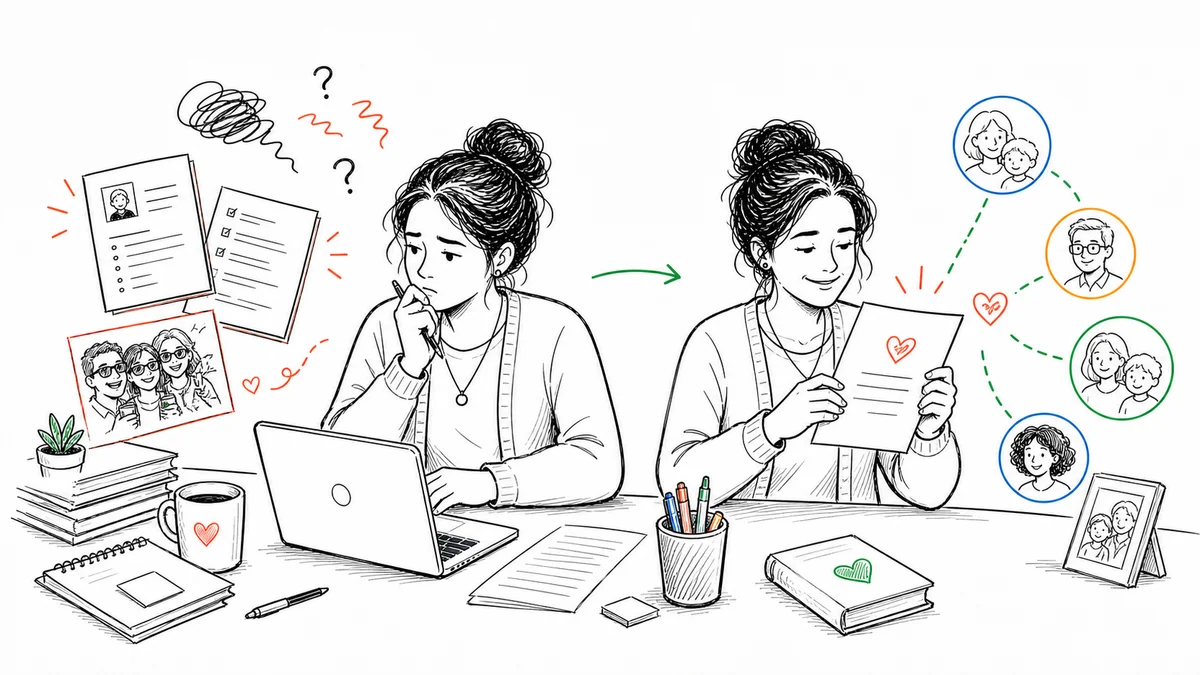
Below are three complete examples for the three situations where you actually need a pure introduction letter, plus the five lines every version needs. Copy any of them into a doc and swap in your own details; they are written to be adapted, not admired. And if your school calls this a meet the teacher letter, you are in the right place: same assignment, same rules. If what you really want is the full back-to-school letter with routines and expectations, that is a different animal, and our welcome letter examples post covers it with four real letters.
The five lines every introduction letter needs
- Who you are and what you teach. Name, grade or subject, one sentence.
- One or two human details. A family fact, a hobby, a favorite team. One is enough. This is the line parents actually remember.
- Your approach, in one sentence. Not a philosophy statement. One honest sentence about what you care about as a teacher.
- How to reach you, specifically. The exact app or email, and when they can expect a reply. Vague contact info reads as "please don't contact me."
- An invitation. Ask parents to tell you one thing about their child. This single line does more for parent relationships than everything else in the letter combined, and almost nobody includes it.
Notice what is not on the list: your full employment history, every certification, or a paragraph about educational philosophy. Parents skim. Give them a person, not a portfolio.
Example 1: First-year teacher
The trap for new teachers is overcompensating with credentials. Confidence reads better than qualifications.
Dear Families,
My name is Ms. Rivera, and I am thrilled to be your child's 4th grade teacher this year at Lincoln Elementary.
A little about me: I grew up right here in the area, earned my degree in elementary education, and completed my student teaching in a 4th grade classroom just like ours. Outside school you will find me running slowly, baking unevenly, and reading anything I can get my hands on.
What you can count on from me: I believe every child in my room should feel known. My goal is that by October, I can tell you something specific and true about your child that has nothing to do with a grade.
The best way to reach me is through our class app or at the school email below. I check messages each school day and will reply within 24 hours on weekdays.
One favor: sometime in the next week, would you send me one sentence about your child? What they love, what worries them about 4th grade, what you wish their teachers understood. It helps me more than you know.
I cannot wait to meet your children.
Warmly, Ms. Rivera
Why this works: No mention of "first year" and no apology, but nothing misleading either. The one-sentence-about-your-child invitation instantly gives her thirty pieces of information most veteran teachers never ask for.
Example 2: Mid-year replacement teacher
This is the highest-stakes version. The families are anxious, the kids are unsettled, and you are a stranger arriving in the middle of the story. Reassurance beats charm.
Dear Families,
My name is Mr. Okafor, and I am honored to be taking over as your child's 2nd grade teacher for the remainder of the year. I know a teacher change mid-year is a lot, for your children and for you, so I want to introduce myself right away.
I have taught elementary school for six years, most recently 2nd grade, and I have spent this week learning your children's names, routines, and current units. My priority is a smooth landing: classroom routines, reading groups, and the homework system are all staying exactly as your children know them.
About me: I am a father of two, a hopeless pun enthusiast, and a firm believer that 2nd graders can do more than we think when they feel safe and known.
You can reach me through the same class app you have been using, and I will respond within one school day. If you have any concerns about the transition, or anything you want me to know about your child, please do not wait: message me this week. I mean it.
Thank you for trusting me with the rest of this year. I intend to earn it.
Sincerely, Mr. Okafor
Why this works: It names the elephant in the room in the first paragraph, answers the continuity question concretely (routines are staying), and opens a direct channel for anxious parents before they need to use it.
Example 3: Specialist or new-to-school teacher
Specialists (art, music, PE, interventionists) see hundreds of students and often skip the introduction letter entirely. A short one changes how families see your subject.
Dear Families,
My name is Mrs. Chen, and I am excited to be the new music teacher at Roosevelt Elementary. Your child will be with me once a week, and I wanted you to know who is behind the singing you may start hearing at home.
I have taught music for eleven years and play the piano, the ukulele, and a very questionable trumpet. In my class, every child sings, plays, and creates, whether or not they think of themselves as musical. Especially if they do not.
If your child comes home talking about a song or an instrument, please ask them to show you. And if there is anything that would help me know your child better, from a love of a certain artist to anxiety about performing, my email is always open: I reply within a couple of school days.
Looking forward to a year of joyful noise.
Musically yours, Mrs. Chen
Why this works: Short, warm, and it recruits parents as allies for the subject. The "questionable trumpet" line does more relationship-building than a paragraph of credentials.
Preschool and daycare version
The same rules apply for preschool and daycare teachers, with one shift in emphasis: parents of the youngest kids care less about curriculum and more about daily rhythm and safety. Swap the "approach" sentence for a "your child's day" sentence: when they nap, how meals work, how you handle tears at drop-off. Keep everything else: the human detail, the specific contact info, and the invitation.
Dear Families,
My name is Miss Dana, and I am so happy to be your child's teacher in the Sunflower Room this year.
A little about me: I have worked with toddlers and preschoolers for six years, and I still think finger paint is one of the best inventions ever made. Outside the classroom I have two cats and a very loud garden.
Drop-off tears are normal for children, and sometimes for parents too. I will do everything I can to help your child feel safe, comfortable, and settled into our classroom routine. Naptime, meals, and our daily rhythm stay steady so your child knows what to expect.
The best way to reach me is our class app, and I check it throughout the day. If anything ever feels off at pickup, big or small, please tell me. We are on the same team here.
I cannot wait to get to know your family.
Warmly, Miss Dana
Why this works: The letter leads with the questions many preschool families have on day one: will my child feel safe and comfortable, and will someone keep me informed? Learning matters too, but reassurance and clear communication come first in an initial introduction.
How to introduce yourself in person: meet the teacher night
The letter is half the assignment. The other half happens face to face at meet the teacher night or back to school night, where you get roughly sixty seconds per family. The good news: the five lines from above double as a spoken script.
"Hi, I'm Ms. Rivera, and I teach 4th grade. I'm a runner and a baker, though not a good one. My big goal this year is that by October I can tell you something true about your child that has nothing to do with a grade. The best way to reach me is the class app, and I reply within a school day. And sometime this week, would you send me one sentence about your child? It helps me more than anything else."
That is the whole thing. Swap in your details and you are done. Three things that make the night easier:
- Stand near the door, not behind the desk. The desk turns a hello into a conference. The door turns it into a handshake.
- Do not recite credentials. Nobody at meet the teacher night is verifying your qualifications. They are deciding whether their child will be happy in your room.
- End every conversation with the invitation. "Tell me one thing about your child" is even more powerful spoken than written, because parents answer on the spot.
How to Introduce Yourself to Parents: First-Email Example
If your first contact with families is digital, compress the letter into an email under 100 words. Subject line: "Your child's [grade] teacher this year." Then:
Dear Families,
My name is Ms. Rivera, and I am excited to be your child's 4th grade teacher this year. A little about me: I am a runner, a baker, and a lifelong reader. My goal is for every child in my room to feel known. The best way to reach me is right here, and I reply within a school day.
One favor: reply with one sentence about your child. It helps me more than you know.
Warmly, Ms. Rivera
If you just need the two-sentence class app version, our 30 short welcome messages post has those ready to paste.
Three mistakes that sink an introduction letter
Turning it into a resume. Parents are not hiring you; the district already did that. A paragraph of certifications reads as nerves, not credibility. One sentence of background, then get to the human being.
Going past one page. Every paragraph you add lowers the odds that any of it gets read. If you are not sure what to cut, keep the human details and the contact info, and cut the philosophy.
Treating it as one-and-done. An introduction letter nobody follows up on is a business card in a junk drawer. The letter opens the door; the follow-through in September and October is what parents actually remember.
After the letter: keep the thread alive
An introduction letter opens a relationship; what you send over the next month decides whether it grows. Two things make the difference:
Send something positive before you have to send something hard. A two-line positive note in September buys enormous goodwill for the harder conversation in November. Our positive behavior email templates make this a two-minute habit rather than one more task.
Keep track of who you have contacted. By week six, you will not remember which families you have actually written to and which you only meant to. A simple log solves it, and the teacher's complete guide to parent communication covers how to set one up without adding paperwork to your life.
This is also where ShortHand quietly earns its keep. It keeps a running log of every parent contact automatically, shows you which families you have not reached yet, and drafts those quick positive notes from the observations you have already jotted down. The introduction letter makes the first impression; ShortHand makes sure the second, third, and tenth impressions actually happen.
Try ShortHand free, and start the year with every family feeling like their child's teacher knows them.
And if what you actually need is the full back-to-school welcome letter rather than an introduction, the free Welcome Letter Generator builds one for your grade and tone in about 30 seconds.
Gregory Lebed is a 3rd grade teacher with 20+ years in education and a former Registered Behavior Technician. He built ShortHand to help teachers spend less time on paperwork and more time teaching.
Frequently Asked Questions
Stop trying to remember everything.
Try ShortHand Free →