5 Student Behavior Patterns Teachers Should Never Ignore
The incident is rarely the problem. The pattern is.
Most student behavior problems do not appear out of nowhere.
By the time a major behavior concern leads to a parent meeting, an intervention plan, an office referral, or an MTSS discussion, there were usually warning signs long before that happened.
The challenge is that teachers are busy. When you are delivering lessons, answering questions, managing transitions, and keeping track of the rest of the class, it is easy to focus on individual incidents instead of the larger pattern forming in the background.
A single incident rarely tells the whole story.
Patterns do.
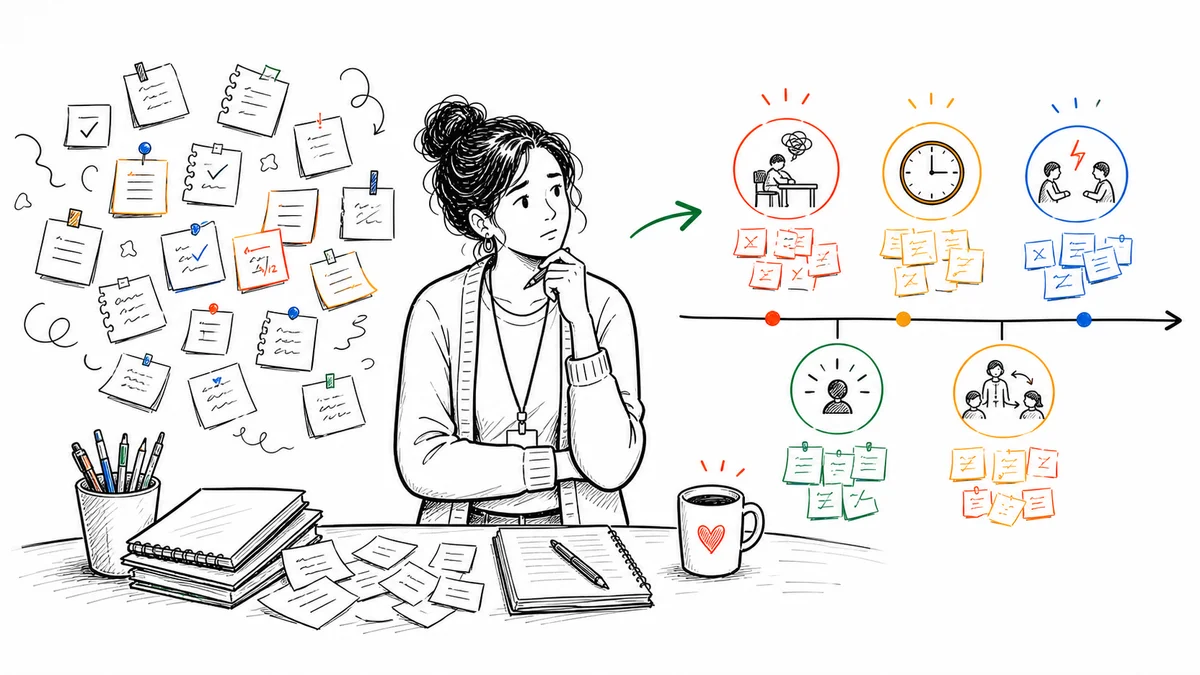
We know the days are long, but the years move fast. By the time you realize a pattern has been developing, you might already be deep into the school year. That is why it matters to start paying attention early.
Here are five behavior patterns I watch closely throughout the year.
1. The Student Who Avoids the Same Type of Task
Every student has days when they do not want to work.
What gets my attention is when avoidance consistently appears around the same type of activity.
For example:
- Leaves the room during writing assignments
- Requests frequent breaks specifically during math
- Suddenly needs the nurse when independent work starts
- Starts conversations whenever difficult tasks begin
The behavior itself may not be the problem. It may be revealing a struggle with the academic task underneath.
When I notice avoidance tied to a specific subject, assignment type, or activity, I start asking different questions. Is this a skill deficit? Is the work too difficult? Is the student feeling overwhelmed before they even start?
Looking for that pattern helps you address the actual issue instead of simply reacting to the behavior over and over.
I had a student who asked to use the bathroom every time I assigned a writing exercise. Journal entries, summaries, narratives, it did not matter. Once I spotted the avoidance pattern, I started providing scaffolding: outlines, sentence starters, graphic organizers. After a few weeks his writing started to improve and the bathroom requests stopped. I just wish I had noticed earlier in the year.
2. The Student Who Struggles During Specific Times of Day
Some students seem well-regulated during one part of the day and consistently fall apart during another.
You might notice:
- Increased frustration before lunch
- Frequent conflicts during recess transitions
- Difficulty focusing late in the afternoon
- Escalations immediately after specials
A single incident might seem random. Several incidents happening during the same time window can reveal something important.
When teachers recognize these time-based patterns, they can often make proactive adjustments before problems grow larger. A quick check-in before the difficult transition. A movement break. A seat change. Small adjustments that cost almost nothing when you know where to aim them.
I once had a student who seemed to struggle every single day right before dismissal. It looked random for weeks. Eventually I learned there were challenges at home that were affecting the student's mood and behavior in the final stretch of the school day. Because I had recognized the pattern, the student got connected to the guidance counselor. In my opinion, that conversation mattered more than anything we covered in common denominators that week.
3. The Student Who Has Repeated Conflicts With Different Peers
One disagreement between students is normal.
What concerns me is when the same student repeatedly experiences conflict with multiple different classmates.
For example:
- Arguments during group work, across different groups
- Frequent complaints coming from peers
- Difficulty maintaining friendships beyond a week or two
- Ongoing social misunderstandings that seem to follow the student
When different students are involved but the same concerns keep appearing, there may be a social skills gap that needs additional support, not just another consequence.
Without documentation, these incidents feel isolated. When you look at them together across a few weeks, they often tell a very different story.
4. The Student Whose Behavior Changes Suddenly
Patterns are not always about what keeps repeating.
Sometimes the most important pattern is a sudden change from what was normal.
Pay attention when a student who is usually:
- Engaged becomes withdrawn
- Cooperative becomes argumentative
- Organized becomes consistently forgetful
- Social becomes isolated
Students experience changes in their lives that teachers are often the last to hear about. A significant shift in a student's baseline behavior is worth monitoring carefully, even if nothing dramatic has happened in the classroom.
The earlier you notice these shifts, the easier it is to connect a student with the right support. Sometimes the change is obvious. Other times it develops slowly enough that you only recognize it when you look back over a month of observations and notice the contrast.
5. The Student Who Receives Constant Redirection
Many teachers become so used to redirecting certain students that they stop noticing how often it is actually happening. It simply becomes the baseline.
Start paying attention to:
- Repeated reminders to stay on task throughout the day
- Frequent prompts just to begin work
- Constant correction during transitions
- Ongoing reminders about classroom expectations that never seem to stick
One redirection is not significant. Twenty redirections every day is a pattern.
A student can appear compliant because major behaviors are not occurring. But the amount of adult support required to keep that student on track may itself reveal a concern that deserves closer attention than it is getting.
Why Patterns Matter More Than Individual Incidents
Individual incidents can mislead you. Patterns provide context.
A single missing assignment might mean nothing. Ten missing assignments tied to writing tasks tell a different story.
One argument with a classmate may be typical childhood conflict. Repeated peer conflicts across different settings and different peers over several weeks may indicate a larger concern.
This is why consistent documentation matters. When teachers keep simple, objective notes over time, they can see trends that would otherwise get forgotten between the morning rush and afternoon dismissal. Those patterns become the most useful thing you bring to a parent conference, an MTSS meeting, an intervention review, or a conversation with your school counselor.
For a practical system for capturing notes quickly enough to actually use during a school day, see how to track student behavior data and how to track student behavior in the classroom.
Start Looking for Trends, Not Just Incidents
Most behavior concerns become visible long before they become serious. The key is learning to look for patterns instead of reacting only to individual events.
My memory is not good enough to keep accurate records on its own. If a coworker, parent, or administrator asked me about a behavior that happened three weeks ago, I might remember the general shape of it, but not the details that actually matter. What happened right before? How did I respond? Did the student's behavior change after the consequence? I might remember part of the story, but not all of it.
When teachers document observations consistently, even briefly, they gain a clearer picture of what students need and when support should be provided.
The goal is not to document every small behavior. The goal is to recognize meaningful patterns early enough to actually help.
If you want a simple framework for what to track from the start of the year, how to document student behavior during the first 30 days is a good starting point. And if a pattern has already led to a formal support plan, how to document Tier 2 interventions for MTSS covers what consistent data collection looks like at that stage.
ShortHand was built to make this kind of tracking realistic. Log a quick note in seconds from your phone. Pull up a student's full history before a parent meeting. Let the notes do the remembering so you do not have to.
Once that history exists, Ask ShortHand can help you figure out something like "has this been a pattern or a one-off?" based only on the notes you've logged. It cannot spot a pattern you never wrote down. The documentation habit above is still what makes it useful.
Part of The Teacher's Complete Guide to Documenting Student Behavior.
Frequently Asked Questions
Stop trying to remember everything.
Try ShortHand Free →